The right knee surgeon is not simply the one with the most impressive title, the newest equipment, or the highest search ranking. You can make a safer comparison by matching the surgeon’s specific experience to your diagnosis, checking measurable results, and confirming that the hospital and follow-up plan fit your recovery needs.
Key takeaways
- Match the surgeon’s main procedure to your specific knee diagnosis.
- Verify registration, focused training, and results for your planned procedure.
- Ask how the diagnosis supports the proposed treatment and what alternatives exist.
- Check hospital support, rehabilitation planning, and access to follow-up care.
Match the Surgeon’s Experience to Your Knee Diagnosis
Choose an orthopedic knee surgeon whose main work matches the structure causing your symptoms, not simply one with a general orthopedic title. The right fit depends on whether you need ligament reconstruction, meniscal treatment, cartilage care, or joint replacement.
| Condition | Best-fit experience | What to compare |
|---|---|---|
| ACL injury | Sports medicine surgeon experienced in ACL reconstruction | Number of ACL reconstructions, graft options, return-to-sport planning, and rehabilitation support |
| Meniscus tear | Sports medicine or arthroscopy surgeon who treats traumatic and degenerative tears | Whether repair is possible, when trimming is appropriate, and how examination and imaging support the diagnosis |
| Cartilage defect or patellar instability | Arthroscopy and sports medicine surgeon | Experience with cartilage restoration, realignment, or stabilisation procedures rather than routine “clean-up” surgery |
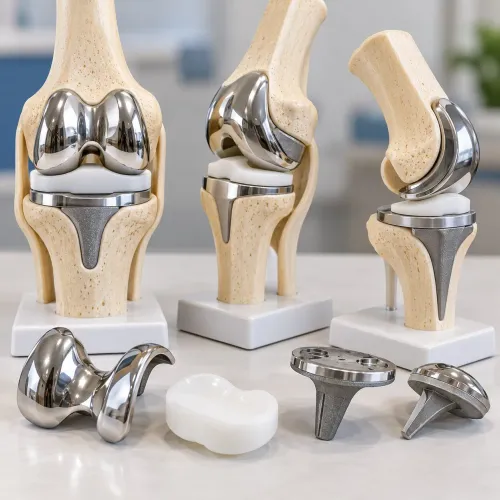
| Advanced osteoarthritis | Adult reconstruction surgeon with substantial knee-replacement experience | Exact replacement volume, implant systems, surgical technique, and rates of infection, blood clots, readmission, reoperation, and revision |
A meniscus tear on an MRI is not automatically the pain source. Degenerative meniscal changes often appear alongside osteoarthritis, so ask the surgeon to reconcile your symptoms and examination with weight-bearing X-rays and the MRI before recommending arthroscopy.
For knee replacement, fellowship training in adult reconstruction is relevant, but procedure-specific results matter more than a title alone. Ask how often the surgeon performs your exact operation and whether the hospital tracks complications and revisions. Higher volume can indicate experience, but it does not replace transparent outcomes and a clear explanation of alternatives.
Verify Training, Registration, and Procedure-Specific Results
Start with identity and registration, not online ratings. Search the surgeon’s registration number in the Karnataka Medical Council register; if you cannot find it, ask the clinic to correct the name or number before proceeding. The National Medical Commission sets India’s medical-registration framework, but registration alone proves permission to practise, not expertise in your operation.
- Ask to see the postgraduate orthopedic qualification and any orthopedic fellowship certificate. For knee replacement, adult reconstruction training is relevant; for ACL or meniscus surgery, sports-medicine training may be more useful. Verify the awarding institution and dates through its official website or registrar.
- Ask how many times the surgeon performed your exact operation in the past 12 months, not how many “knee cases” the practice handles. Surgeon volume is a risk indicator, not a safety guarantee; no universal cutoff makes a surgeon safe or unsafe.
- Request procedure-specific figures: infection, blood-clot, readmission, reoperation, and revision rates, plus the time period and number of patients behind each percentage. Ask whether the figures cover the surgeon’s own cases or the entire hospital.
- Confirm hospital privileges for the operation and ask where complications are treated. For additional certification checks, use the ABMS Certification Matters directory when the surgeon claims American Board of Orthopaedic Surgery certification; certification does not prove high volume or superior knee results.
A credible surgeon answers these questions plainly, explains limitations in the data, and connects training and results to your diagnosis rather than presenting a general orthopedic title as proof of every knee specialty.
Use the Consultation to Test the Treatment Plan
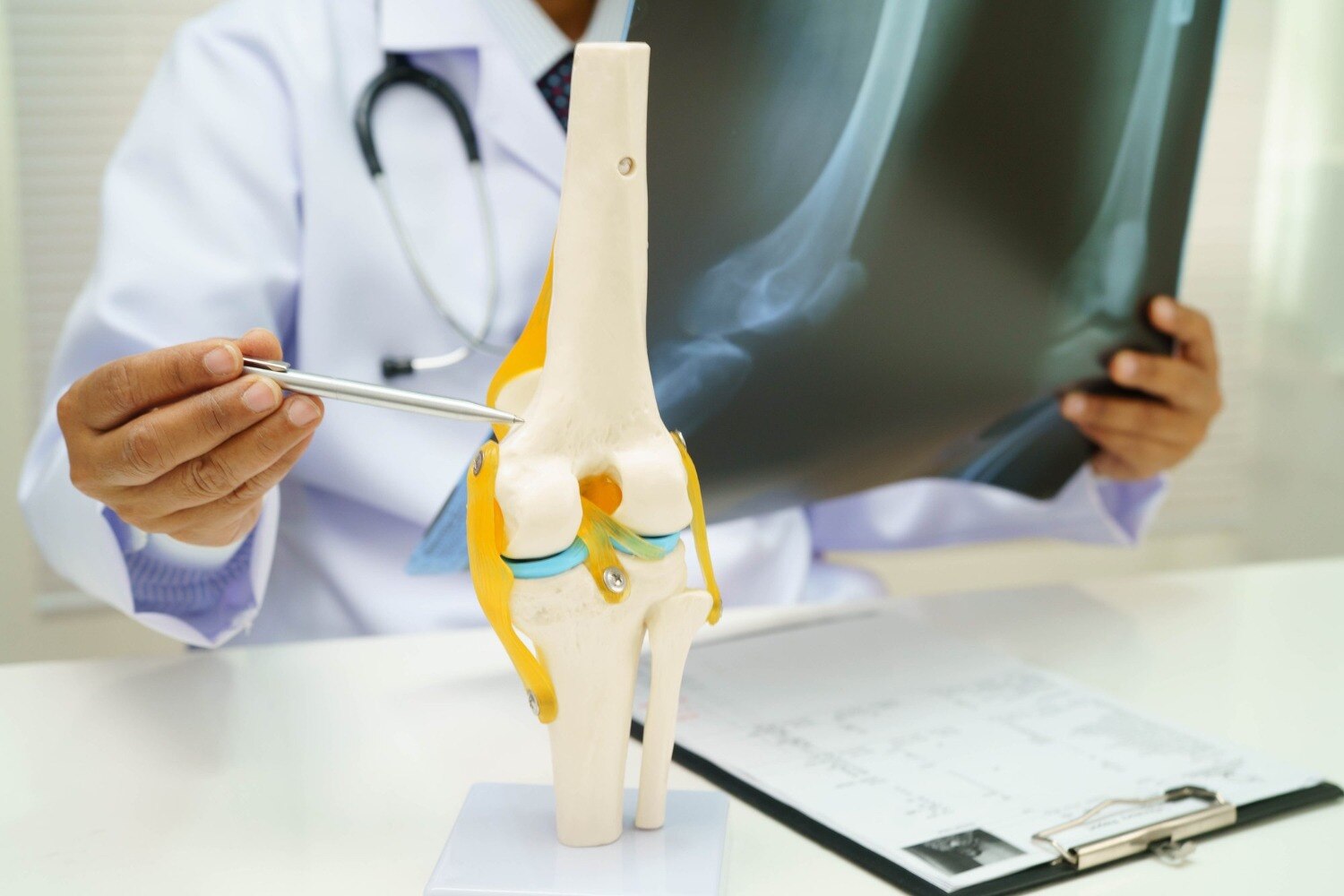
Before agreeing to knee surgery, ask the surgeon to connect your symptoms, physical examination, weight-bearing X-rays, and MRI to one diagnosis. A meniscal tear on a scan is not automatically the pain source, especially when osteoarthritis is also present. Surgery should address pain and lost function, not an X-ray abnormality alone.
Prepare written knee consultation questions and ask:
- What improvement should this operation deliver, and what pain or movement problem might remain?
- What non-surgical treatment is still reasonable, and why is surgery preferable now? Ask whether physiotherapy, activity changes, medication, injections, or weight management could help.
- Which procedure, technique, and materials will you use? For a replacement, ask which knee replacement implant is proposed, why it suits you, and whether robotic or computer assistance improves meaningful outcomes rather than only X-ray alignment.
- What are your rates of infection, blood clots, readmission, reoperation, and revision for this exact operation?
- What will anesthesia and rehabilitation involve? Ask about hospital stay, wound care, pain control, physical therapy, driving, work, stairs, sport, and daily activities.
- If pain persists, what causes will you investigate, and what treatment comes next?
The surgeon should explain benefits, risks, restrictions, and alternatives in language you understand, then include your goals in the decision. If the diagnosis remains unclear or the proposed operation is irreversible, pause before scheduling.
Evaluate the Hospital, Care Team, and Follow-Up Access
A surgeon’s plan is only as workable as the hospital and recovery system behind it. Check hospital quality and safety information, including accreditation, emergency cover, nursing ratios where available, and infection control practices. A high-volume joint-replacement unit can also indicate a team familiar with preventing and managing procedure-specific complications.
Ask who will manage each stage after surgery. Your decision should account for the operating surgeon, anaesthetist, ward nurses, physiotherapy team, and pain management service—not just the person holding the scalpel.
Before scheduling, confirm these practical details:
- Who can you contact if swelling, fever, wound drainage, calf pain, or uncontrolled pain develops?
- Where will follow-up visits occur, and how quickly can the surgeon examine you after discharge?
- Does the hospital provide physiotherapy, or must you arrange an outside provider?
- What happens if you need urgent imaging, wound care, or readmission?
- Who gives written instructions for medication, exercises, walking aids, driving, work, and bathing?
Follow-up access matters most during the first weeks, when a wound problem or stiffness can change recovery. A distant hospital, unclear after-hours coverage, or delayed physiotherapy can turn a technically successful operation into a difficult recovery.
For example, when comparing Dr. Manohar Rao Ortho with another knee practice, ask both to describe the hospital team, discharge pathway, and named contact for postoperative problems rather than comparing surgeon credentials alone. Choose the arrangement you can realistically reach and follow.
Related services
Knee Replacement also known as knee arthroplasty, is a transformative surgical procedure that relieves pain and restores function in severely damaged knee joints. View service → |
Sports Injury Treatments Dr. Manohar Rao H R – Expert Sports Injury TreatmentsWhether you are a professional athlete striving for peak performance or a fitness enthusiast... View service → |
Know When a Second Opinion Is Worth the Delay
Pause before scheduling surgery when the diagnosis is uncertain, the proposed procedure is irreversible, or your symptoms do not match the scan. A second opinion is worth the delay if the recommendation is based mainly on MRI findings rather than your examination, symptom pattern, and weight-bearing X-rays.
| Situation | Why another opinion helps | What to ask the second surgeon |
|---|---|---|
| Meniscal tear with arthritis or unclear pain source | A degenerative tear may coexist with osteoarthritis without causing the pain | Which finding best explains your symptoms, and what happens without surgery? |
| Knee arthroscopy for degenerative disease | Arthroscopy may not improve pain caused primarily by arthritis | What specific problem will the procedure correct, and what nonsurgical options remain? |
| Recommended knee replacement | The operation is irreversible and requires substantial recovery | What benefit is realistic, and what are the risks, restrictions, and alternatives? |
| Revision surgery | The cause of failure must be identified before another operation | Is the problem infection, loosening, alignment, instability, stiffness, or something else? |
Bring the actual MRI images, report, radiographs, medication list, and prior operative records. Ask both surgeons to explain the diagnosis, expected improvement, complication risk, rehabilitation, and the plan if pain persists.
Do not delay urgent assessment for a hot, swollen knee with fever, a suspected fracture, or a suddenly locked joint. In those situations, seek prompt medical care rather than waiting for a routine opinion.
Frequently asked questions
How do I match an orthopedic knee surgeon to my diagnosis?
Choose a surgeon whose main work matches the structure causing your symptoms, such as ligaments, meniscus, cartilage, or the joint itself. Ask how frequently they perform your specific procedure.
What should I verify before choosing a knee surgeon?
Check the surgeon’s medical registration, relevant orthopedic training, hospital privileges, and procedure-specific results. Ask for outcomes that relate to your planned operation rather than general orthopedic experience.
What should I ask during a knee surgery consultation?
Ask how the diagnosis was established, why the proposed treatment fits, which non-surgical and surgical alternatives exist, and what recovery involves. Request clear answers about risks, rehabilitation, and expected limitations.
When is a second opinion worth the delay?
Seek a second opinion when surgery is elective, the diagnosis is uncertain, treatment options differ, or the proposed operation has major recovery demands. Do not delay urgent care for a second opinion when a serious injury requires prompt treatment.
Related service
Knee Arthroscopy Knee Arthroscopy is a minimally invasive surgical procedure that allows Dr. View service → |