A torn anterior cruciate ligament can change the way the knee feels during everyday movement, exercise, and sport. Some people notice immediate instability after an injury, while others initially experience swelling and pain that gradually settle. The important question is whether the knee remains stable enough for the person's usual activities.
ACL reconstruction surgery is one treatment option for a significantly injured ACL. It is not automatically required for every ACL tear. The decision usually depends on the extent of ligament damage, knee stability, associated injuries, activity level, age, occupation, and future movement goals.
For patients in Bangalore and other parts of Karnataka, understanding these factors can make discussions with an orthopaedic surgeon more productive.
What Happens When the ACL Is Injured
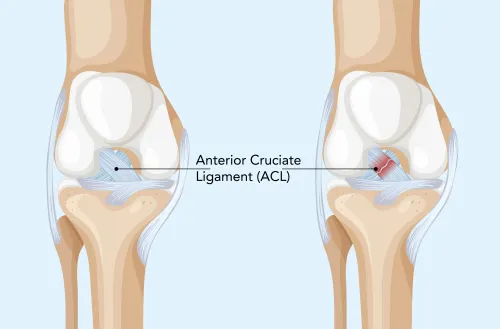
The ACL is one of the major ligaments that helps control forward movement and rotation of the knee. Injuries commonly occur during sudden changes of direction, awkward landings, twisting movements, or sports-related incidents.
Common symptoms can include:
- A popping sensation at the time of injury
- Rapid knee swelling
- Pain during movement
- Difficulty bearing weight
- Reduced range of motion
- A feeling that the knee may give way
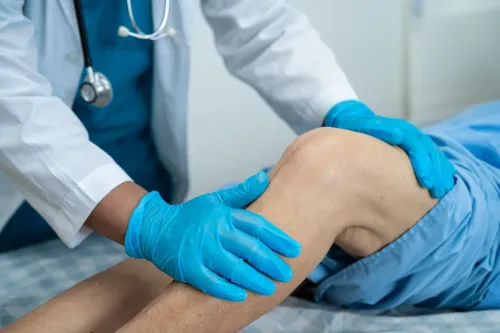
Symptoms alone cannot determine the exact severity of the injury. Clinical examination and imaging, when indicated, help establish whether the ligament is partially damaged or completely torn and whether other knee structures are affected.
When Non-Surgical Management May Be Considered
Not every ACL injury leads directly to surgery. Some patients with lower physical demands and acceptable knee stability may be managed with rehabilitation.
A structured programme can focus on reducing swelling, restoring movement, strengthening the muscles around the knee, and improving balance and neuromuscular control.
The response to rehabilitation is important. A patient who regains good function without repeated instability may have different treatment needs from someone whose knee continues to buckle during routine activity.
When ACL Reconstruction Becomes a Consideration
ACL reconstruction surgery may be discussed when instability continues despite appropriate rehabilitation, particularly when the patient wants to return to activities involving pivoting, cutting, jumping, or rapid directional changes.
Surgical treatment may also be considered when an ACL tear occurs alongside certain meniscus, cartilage, or other ligament injuries.
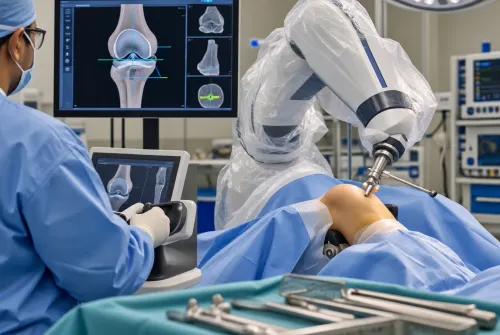
The objective of reconstruction is to restore functional knee stability using a graft to replace the damaged ligament. The procedure is generally followed by a progressive rehabilitation programme.
At Dr. Manohar Rao Ortho, assessment of an ACL injury can include the injury history, physical examination, imaging findings, functional requirements, and the patient's expectations before treatment options are discussed.
Why Timing Needs Individual Assessment
An ACL injury does not always mean surgery should be performed immediately. Significant swelling and restricted movement may need to improve first.
Pre-operative rehabilitation may be advised to restore knee extension, improve muscle activation, and reduce inflammation. Entering surgery with a stiff, swollen knee can influence the rehabilitation process, which is why timing is usually individualised.
Recovery Involves More Than the Operation
ACL reconstruction is one stage of treatment. Rehabilitation plays a major role in restoring strength, mobility, balance, and confidence.
Recovery typically progresses through stages rather than according to a single fixed timeline. Early rehabilitation focuses on swelling control and movement. Later stages introduce strengthening, functional exercises, and activity-specific training.
Return to sport should generally depend on functional recovery and clinical assessment rather than simply counting the months since surgery.
Anyone in Bangalore experiencing persistent knee instability after an ACL injury can benefit from a detailed orthopaedic evaluation. Understanding the extent of the injury and the demands placed on the knee helps determine whether rehabilitation alone or ACL reconstruction surgery should be considered.
Keywords