Patients considering Total Hip Replacement often want to understand how surgery differs from continuing with medication, activity modification, and physiotherapy. The decision usually depends on how advanced the joint damage has become and how much symptoms interfere with everyday life.
Conservative treatment can remain useful for many people, while replacement may become relevant when severe arthritis continues to limit mobility despite appropriate care.
How Total Hip Replacement Differs From Conservative Care
Non-surgical treatment aims to manage symptoms while preserving the natural joint.
It may include:
- Medication
- Physiotherapy
- Activity modification
- Strengthening
- Weight management when appropriate
- Walking aids
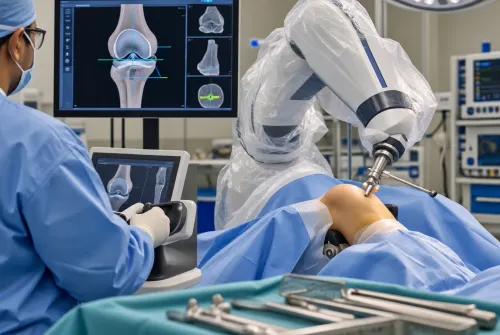
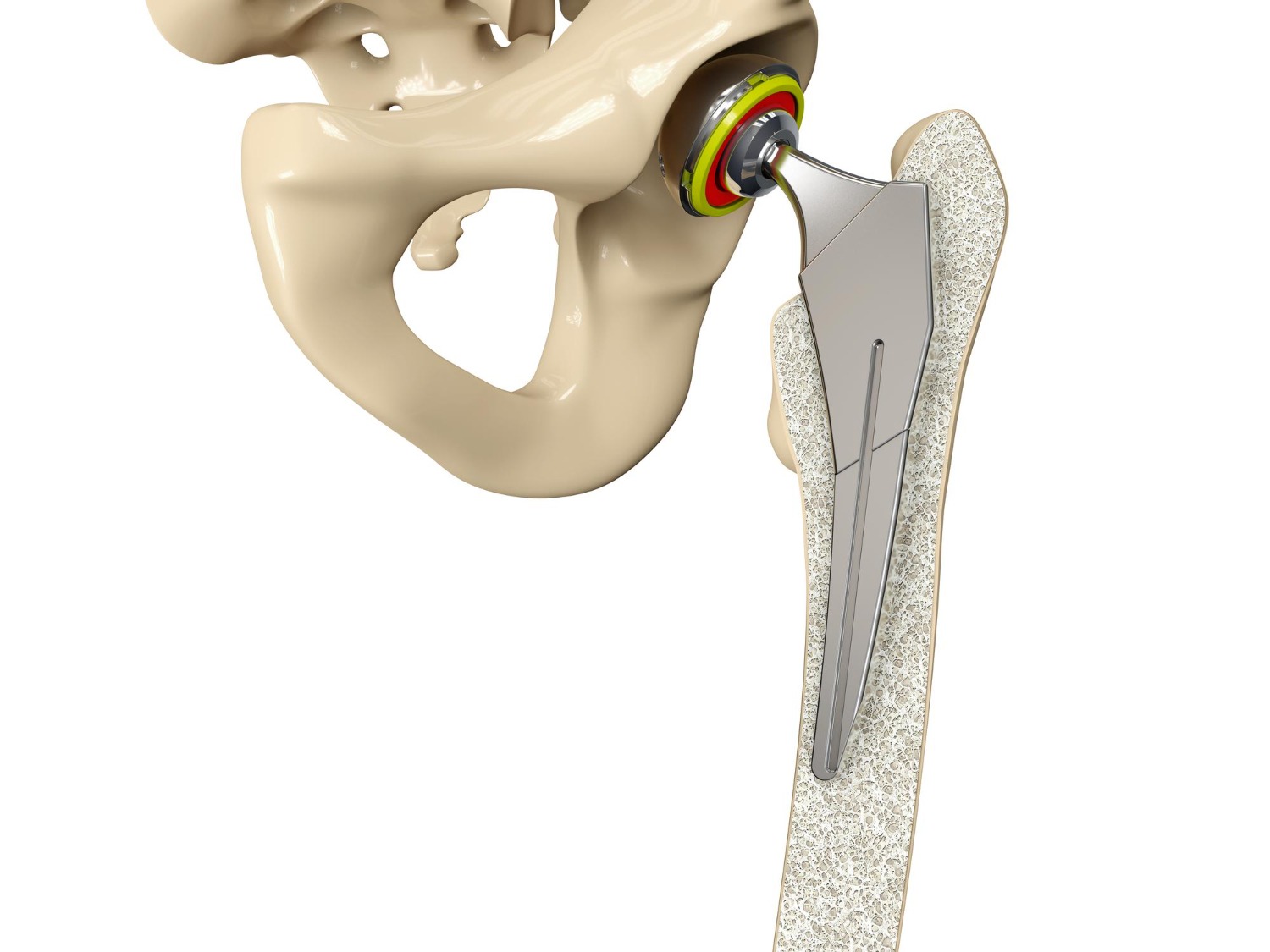
Total hip replacement takes a different approach. Damaged joint surfaces are removed and replaced with artificial components.
Surgery is therefore generally considered after symptoms and structural damage have reached a significant level.
Signs That Support Total Hip Replacement Assessment
Evaluation becomes more relevant when patients experience:
- Persistent groin or hip pain
- Limited walking distance
- Increasing stiffness
- Difficulty getting out of chairs
- Sleep disturbance
- Problems putting on footwear
- Reduced independence
- Limited response to conservative care
These factors should be assessed together with imaging findings.
What Happens During Total Hip Replacement
The hip joint consists of a ball and socket.
During surgery, the damaged femoral head is replaced and the socket is prepared to receive a prosthetic component.
Implant and fixation choices depend on factors such as:
- Bone quality
- Anatomy
- Age
- Activity requirements
- Medical condition
The procedure is planned according to individual needs.
Recovery After Total Hip Replacement
Patients commonly begin mobilization during the early postoperative period.
A walking aid may be used initially. Physiotherapy can help improve:
- Muscle strength
- Walking pattern
- Balance
- Functional mobility
Daily activities are resumed gradually.
The timeframe for returning to driving, work, exercise, and travel varies according to individual recovery.
Benefits of Total Hip Replacement
Potential benefits include:
- Reduced arthritis-related pain
- Improved walking
- Increased mobility
- Greater independence
- Improved ability to complete daily activities
The extent of improvement varies between patients.
Risks Linked With Total Hip Replacement
Possible complications include:
- Infection
- Blood clots
- Bleeding
- Dislocation
- Fracture
- Nerve injury
- Implant loosening
- Differences in leg length
- Medical complications
These risks should be discussed before surgery.
Preparation and Care With Total Hip Replacement
Before treatment, patients may undergo medical testing, imaging, medicine review, and fitness assessment.
At home, clear pathways and temporary support can help during early recovery.
Following surgery:
- Follow wound-care instructions
- Use walking aids as advised
- Complete recommended exercises
- Avoid sudden high-impact activity
- Attend follow-up reviews
Evaluating Total Hip Replacement in Bangalore
Patients should assess whether conservative care continues to provide acceptable function.
At Dr. Manohar Rao Ortho, people in Bangalore with persistent hip arthritis can discuss current symptoms, imaging, mobility limitations, previous treatments, and surgical suitability.
Common Questions About Total Hip Replacement
Should surgery be delayed until walking becomes impossible?
Not necessarily. Timing is individualized based on symptoms, function, health, and joint damage.
Can physiotherapy prevent the need for surgery?
It can help many patients manage symptoms, but advanced structural damage may eventually require surgical consideration.
How long does recovery take?
Functional improvement occurs progressively over weeks and can continue for several months.
Are lifelong precautions required?
Advice depends on the implant, surgical technique, patient factors, and recovery.
For patients throughout Bangalore and Karnataka, the choice between continued conservative care and replacement should focus on current function, symptom burden, and the expected value of surgery.
Keywords