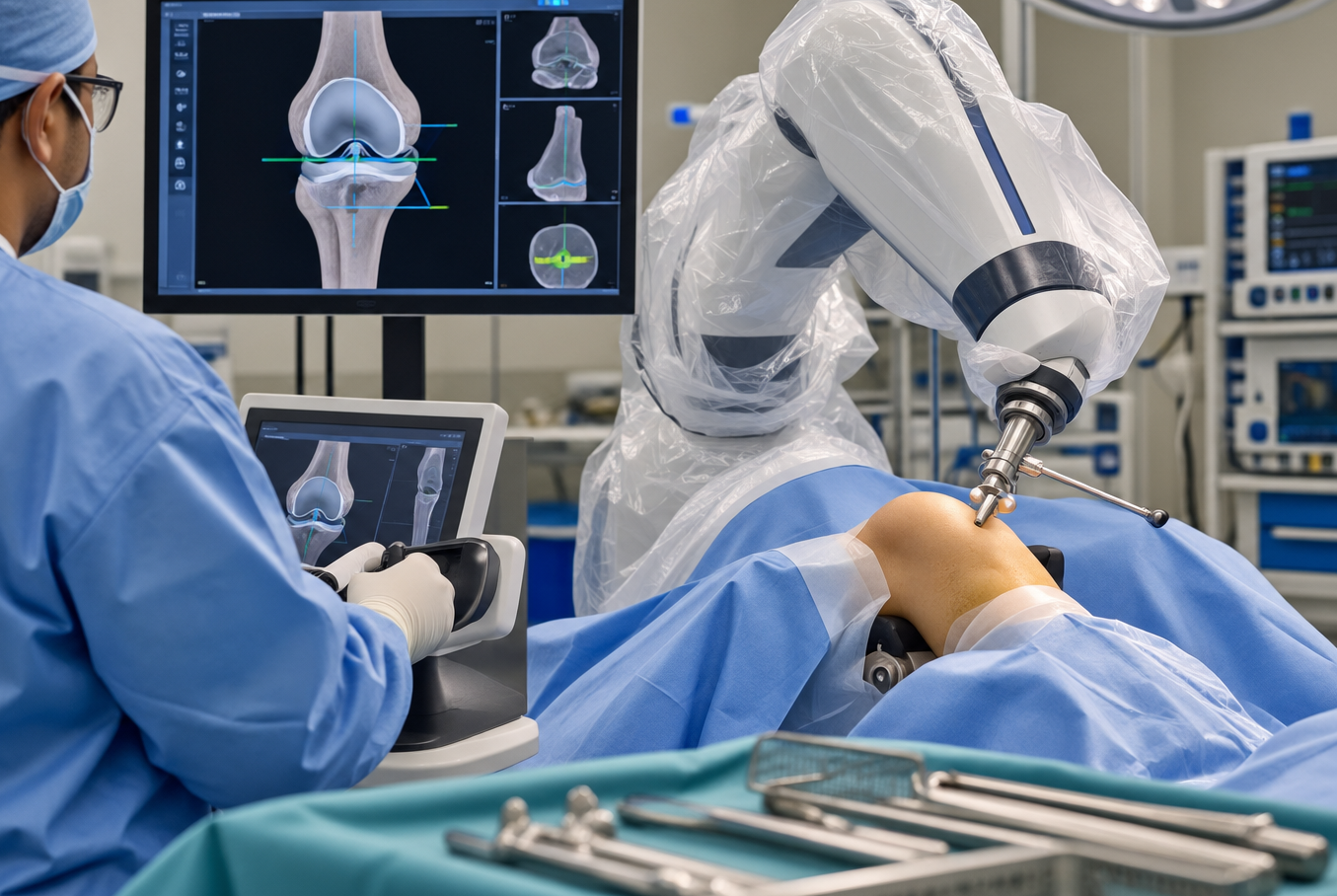
Technology-assisted joint replacement has become an important development in orthopedic surgery. Robotic Knee Replacement Surgery uses digital planning and robotic assistance to support selected stages of the procedure while the orthopedic surgeon remains responsible for clinical decisions and surgical execution.
Patients researching this approach in Bangalore often want to know what the technology actually changes and whether it alters recovery.
How Robotic Knee Replacement Surgery Works
The exact process depends on the robotic platform being used.
In general, the system can help the surgeon evaluate knee anatomy, create a surgical plan, and perform bone preparation within planned parameters.
Robotic assistance may support:
- Detailed anatomical assessment
- Surgical planning
- Bone-cut guidance
- Implant positioning
- Alignment assessment
- Intraoperative decision-making
The robot does not independently decide how the patient should be treated.
Potential Benefits of Robotic Knee Replacement Surgery
Technology can provide additional measurements and planning information during surgery.
Depending on the system and individual case, potential advantages may include:
- Greater planning detail
- Controlled bone preparation
- Support with component positioning
- Additional alignment information
These technical benefits should be considered as part of the overall surgical pathway.
They do not replace:
- Surgeon experience
- Appropriate implant selection
- Medical preparation
- Physiotherapy
- Postoperative monitoring
Candidate Selection in Robotic Knee Replacement Surgery
Patients who are already suitable candidates for knee replacement may discuss whether robotic assistance adds value in their individual case.
Factors considered can include:
- Severity of arthritis
- Knee deformity
- Anatomy
- Bone quality
- Previous surgery
- General health
- Technology availability
Conventional knee replacement remains an established approach, so robotic assistance should not be viewed as essential for every patient.
Preparation Before Robotic Knee Replacement Surgery
Patients generally undergo the same type of medical preparation required for major knee replacement surgery.
This may include:
- Blood investigations
- Imaging
- Medical fitness assessment
- Medication review
- Diabetes management
- Blood pressure management
- Infection screening when needed
Home preparation and planning for postoperative assistance can also make early recovery easier.
Recovery Following Robotic Knee Replacement Surgery
Robotic assistance does not remove the body's need to heal.
Patients still undergo a surgical procedure involving bone and soft tissues. Physiotherapy remains central to recovery.
Early rehabilitation may focus on:
- Standing
- Assisted walking
- Knee bending
- Knee straightening
- Muscle activation
- Swelling control
Later stages focus on strength, balance, endurance, and independent activity.
Recovery speed varies between individuals.
Risks Linked With Robotic Knee Replacement Surgery
The established risks of knee replacement still apply.
Possible complications include:
- Infection
- Blood clots
- Bleeding
- Stiffness
- Persistent pain
- Implant complications
- Nerve injury
- Fracture
- Medical complications
Technology-specific considerations may also depend on the platform used.
Evaluating Robotic Knee Replacement Surgery in Bangalore
Patients should ask how the robotic system will be used and why it is considered appropriate in their case.
At Dr. Manohar Rao Ortho, patients in Bangalore can discuss knee replacement options in the context of their arthritis severity, functional needs, medical health, and available surgical approaches.
Common Questions About Robotic Knee Replacement Surgery
Does the robot perform the operation by itself?
No. The surgeon remains in control of the procedure.
Does robotic assistance guarantee faster recovery?
No. Recovery depends on multiple factors including health, muscle strength, rehabilitation, surgical findings, and healing.
Is physiotherapy still required?
Yes. Rehabilitation remains important.
Is robotic assistance suitable for everyone?
Suitability should be determined individually.
The most useful way to evaluate robotic technology is to understand what it contributes to surgical planning rather than assuming the technology alone determines treatment quality.
Keywords