When knee arthritis becomes advanced, people often reduce walking, avoid stairs, stop recreational activities, and change their routines to accommodate pain. Total Knee Replacement may be considered when these limitations continue despite appropriate conservative treatment.
The procedure aims to improve function by replacing severely damaged joint surfaces, but benefits should always be understood alongside recovery requirements and possible risks.
How Total Knee Replacement Can Improve Daily Function
The most important potential benefit is reduction of pain associated with damaged knee surfaces.
Improved comfort may help patients:
- Walk more easily
- Climb stairs with greater confidence
- Stand from a chair more comfortably
- Perform household activities
- Participate in suitable low-impact activity
- Maintain greater independence
Individual results vary, and the procedure does not create a completely natural knee.
When Total Knee Replacement May Be Appropriate
Surgery may be considered when patients experience:
- Persistent knee pain
- Significant stiffness
- Limited walking
- Increasing deformity
- Night discomfort
- Reduced knee movement
- Inadequate relief from non-surgical care
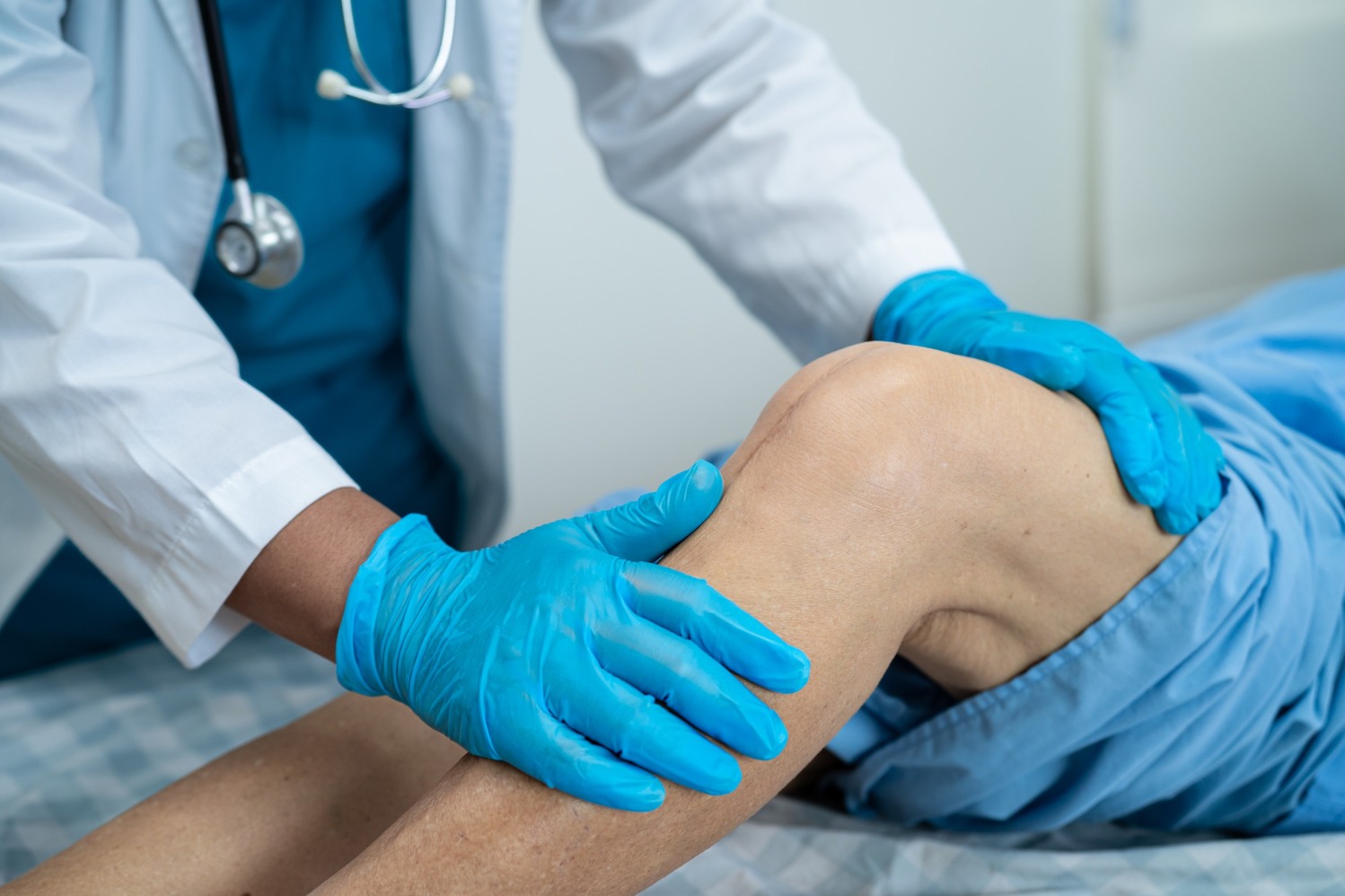
X-rays can help identify structural damage, while clinical examination provides information about movement, stability, and functional limitations.
What Happens During Total Knee Replacement
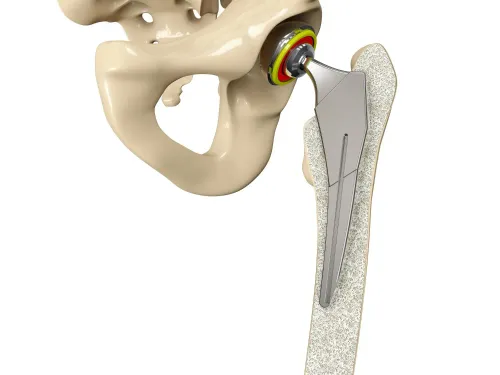
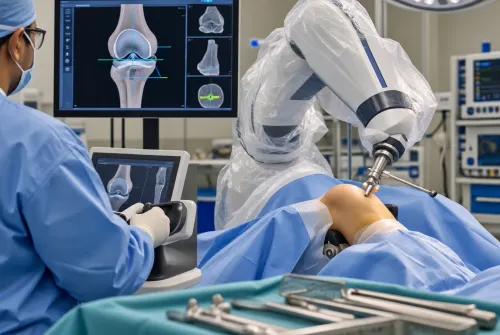
During the operation, damaged knee surfaces are prepared and replaced with prosthetic components.
Surgical planning may take into account:
- Bone shape
- Joint alignment
- Ligament balance
- Bone quality
- Deformity
- Overall health
The implant is selected according to individual clinical requirements.
Preparing Before Total Knee Replacement
Patients usually undergo preoperative investigations and medical fitness assessment.
Preparation may involve:
- Blood tests
- Imaging
- Medication review
- Diabetes management
- Blood pressure management
- Screening for active infections
Patients should also prepare their home and arrange support for the early postoperative period.
Recovery Time After Total Knee Replacement
Rehabilitation begins relatively early according to the treating team's instructions.
Initial goals may include:
- Safe standing
- Assisted walking
- Swelling control
- Knee bending
- Knee straightening
- Muscle activation
Later rehabilitation works toward improving balance, strength, endurance, and independence.
Meaningful recovery continues over several weeks, with further gains possible over subsequent months.
Risks Associated With Total Knee Replacement
Potential complications include:
- Infection
- Blood clots
- Bleeding
- Joint stiffness
- Persistent discomfort
- Implant loosening
- Fracture
- Nerve injury
- Medical complications
Understanding these risks is an important part of informed decision-making.
Post-Treatment Care Following Total Knee Replacement
Patients should follow guidance concerning:
- Wound care
- Medication
- Walking aids
- Physiotherapy
- Activity progression
- Follow-up appointments
Exercise should increase gradually rather than aggressively.
Evaluating Total Knee Replacement in Bangalore
Patients considering surgery should understand both expected benefits and realistic limitations.
At Dr. Manohar Rao Ortho, individuals in Bangalore with advanced knee arthritis can discuss whether continued conservative management or joint replacement is appropriate based on their symptoms and functional limitations.
Common Questions About Total Knee Replacement
Can knee replacement remove all pain?
Many patients experience substantial improvement, but complete absence of every sensation cannot be guaranteed.
How quickly can walking start?
Mobilization commonly begins early, depending on the patient's medical condition and surgical plan.
Will physiotherapy be needed?
Yes. Rehabilitation supports movement, strength, and functional recovery.
Can the implant wear over time?
Yes. Longevity varies according to implant factors, activity, body weight, health, and other considerations.
For patients across Bangalore and Karnataka, total knee replacement is best evaluated through realistic functional goals rather than the expectation of an instant return to normal activity.
Keywords