Book an orthopedic assessment when joint symptoms continue, return repeatedly, or begin to limit walking, sleep, work, or ordinary tasks despite sensible home care. Seek urgent medical attention instead when injury, infection, circulation, or nerve warning signs make waiting for a routine appointment unsafe.
Key takeaways
- Book an orthopedic appointment when joint symptoms limit walking, stairs, work, or sleep.
- Seek urgent care for sudden severe pain, major injury, deformity, or a hot swollen joint.
- Bring symptom details, medication lists, prior reports, and questions to your first visit.
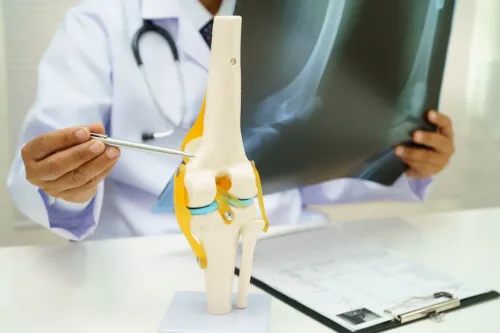
- An abnormal X-ray does not decide treatment without symptoms, examination, and functional impact.
When do persistent joint symptoms justify an orthopedic appointment—or urgent care?
Persistent joint pain lasting longer than several weeks deserves a routine orthopedic appointment, especially if it limits what you can do rather than only how much it hurts. Night pain and joint problems that wake you or disrupt walking, stairs, dressing, work, or sleep are practical reasons to arrange an assessment.
| Situation | Action | What it means |
|---|---|---|
| Pain lasting several weeks, recurring joint swelling, or increasingly restricted movement | Book a routine appointment | These patterns need diagnosis and a plan, even without severe pain |
| Symptoms continuing after activity adjustment, physiotherapy, medicines, or other home measures | Arrange an assessment sooner | Persistent symptoms after an appropriate nonsurgical trial may need specialist review |
| A significant injury followed by deformity, inability to bear weight, a locked joint, or rapidly increasing swelling | Seek urgent assessment | You could have a fracture, dislocation, major ligament injury, or internal joint damage |
A hot, red, swollen joint with fever or feeling acutely unwell needs urgent medical assessment for possible septic arthritis, not a routine booking. Normal blood tests alone do not exclude infection; urgent joint-fluid testing may be needed. Sudden calf swelling also needs urgent evaluation, as does a newly numb or weak limb.
These warning signs take priority when deciding when to see an orthopedic surgeon.
Which clinician should you see first for an ongoing joint problem?
Start with a primary-care clinician: they can examine the joint, review medicines, and order basic tests. A primary care referral to orthopedics becomes especially useful when the diagnosis is uncertain, function is substantially reduced, symptoms persist despite nonsurgical care, or surgery could be reasonable.
| Clinician | Clues that fit | Likely next step |
|---|---|---|
| Primary-care clinician | One ongoing joint problem without urgent warning signs | Examination, medicine review, basic tests, and referral if needed |
| Orthopedic surgeon | Major functional loss, uncertain diagnosis, persistent symptoms, or possible operation | Assess joint structure and surgical or nonsurgical options |
| Sports medicine | Repeated giving-way, catching, or true locking after injury | Evaluate for meniscus, ligament, loose body, or another internal problem |
| Rheumatologist | Stiffness over 30 minutes, several swollen joints, symptoms on both sides, psoriasis, bowel disease, eye inflammation, or fatigue | Prompt evaluation for inflammatory arthritis |
| Spine or nerve clinician | Numbness, weakness, or nerve compression joint pain; pain referred from the back | Assess nerve compression or spinal causes |
Tendon or bursa pain often needs targeted rehabilitation, not joint replacement. Bring persistent symptoms to medical attention rather than choosing a specialty from the painful location alone.
A hot, red, swollen joint with fever or feeling acutely unwell needs urgent assessment, not a routine referral. Infection can damage cartilage quickly and requires urgent joint-fluid testing.
What should you bring and expect at the first orthopedic consultation?
Bring medical records for your orthopedic appointment: previous X-rays, MRI or CT scans with written reports, operation notes, medication and allergy lists, injection records with dates and injection sites, and relevant blood-test results. A joint pain symptom diary kept for one to two weeks gives the clinician usable detail rather than a single bad day.
Expect questions about when symptoms began, what triggers them, whether pain is constant or activity-related, and how long morning stiffness lasts. Describe effects on walking, stairs, work, sleep, dressing, and other usual activities.
The examination includes the painful joint and nearby joints. The clinician checks alignment, tenderness, range of motion, and strength, then performs a gait assessment or watches specific movements. The spine may also be examined if referred pain or nerve symptoms are possible.
Use this checklist before you attend:
- Record pain triggers, walking distance, night waking, swelling, giving-way, and tasks you cannot complete.
- Note previous physiotherapy, braces, walking aids, medicines, and injections.
- Bring the actual scan images when available, not only the report.
- Ask what diagnosis fits, what needs treatment now, and what should be monitored.
A first orthopedic consultation does not commit you to surgery. It may lead to a different diagnosis, rehabilitation plan, medication changes, targeted imaging, follow-up, or referral to rheumatology.
Which scans help, and why does an abnormal X-ray not decide treatment?
For suspected osteoarthritis with a typical history and examination, routine imaging is not always needed. Imaging becomes useful when symptoms are atypical, another diagnosis is possible, or an operation needs planning; a standing X-ray of the joint then shows joint-space narrowing, osteophytes, alignment, and deformity.
| Scan | What it shows | When it helps |
|---|---|---|
| Standing X-ray | Joint space, osteophytes, alignment, deformity | Typical arthritis with unusual features or operation planning |
| Ultrasound | Selected tendons, bursae, fluid collections, and accessible soft tissues | Ultrasound for tendon injury or a suspected superficial fluid problem |
| MRI | Cartilage, menisci, ligaments, tendons, bone marrow, and occult bone findings | Internal derangement, persistent unexplained symptoms, or suspected hidden bone injury |
| CT | More detailed complex bone anatomy | Deformity, fractures, or assessment after previous surgery |
An abnormal X-ray does not identify the tissue causing pain. Severe-looking arthritis can cause modest symptoms, while substantial disability can occur with less striking changes. MRI cartilage ligament tendon findings also need clinical interpretation, not automatic escalation to surgery.
Your clinician should compare the scan with symptoms, examination findings, functional loss, and your response to nonsurgical treatment. Ask which finding matches your symptoms, what it changes in management, and whether another diagnosis remains possible. Treat an imaging report as evidence, not as a surgical recommendation.
When should you discuss joint replacement or other specialist treatment?
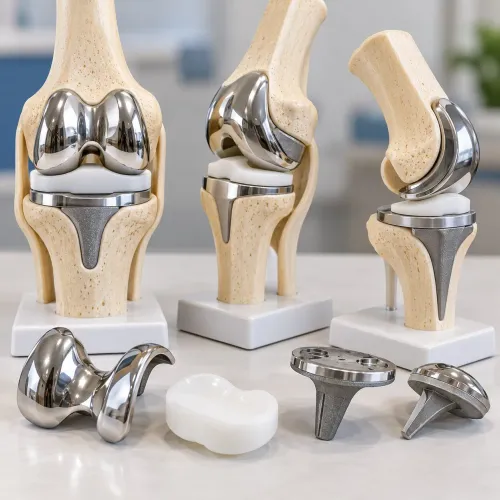
You do not need to be unable to walk before discussing replacement. Book a joint replacement consultation when pain and stiffness disrupt quality of life, daily activities, work, or sleep, and suitable nonsurgical treatment before surgery has not brought enough relief.
| Option | Purpose | What to ask |
|---|---|---|
| Activity modification and exercise | Reduce aggravating load and preserve movement | Which activity should change, and what improvement should you measure? |
| Strength and mobility work | Improve support, range, and function | Which exercises fit your joint and diagnosis? |
| Weight management and walking aids | Reduce joint load and improve stability | Would weight reduction or a cane change symptoms or surgical safety? |
| Topical or oral medicines | Control pain when safe | Which medicine suits your health history, and for how long? |
| Injections or inflammatory-disease treatment | Provide symptom relief or address inflammation | Is this treating the cause, and when should we reassess? |
Corticosteroid injections commonly relieve osteoarthritis for about 2 to 10 weeks; they are not a cure, and repeated use has limits. Tell the surgeon the date of every injection: a corticosteroid injection before joint replacement within three months of surgery has been associated with higher infection risk.
Age alone does not rule out surgery. Medical fitness, function, expectations, and implant longevity matter; obesity and smoking raise risks, while weight reduction and smoking cessation can improve safety without automatically excluding replacement.
In J. P. Nagar, Dr. Manohar Rao Ortho can provide a focused review with an orthopedic surgeon Bengaluru patients can access for these choices.
Related services
Hip Replacement Surgery Regain Mobility. Reduce Pain. Return to an Active Life. View service → |
Complex Hip Replacement # Complex Hip Replacement ### Specialised Care for Challenging Hip Joint Conditions **Complex Hip Replacement** is an advanced orthopaedic procedure... View service → |
Frequently asked questions
When do persistent joint symptoms justify an orthopedic appointment?
Arrange a routine orthopedic appointment when symptoms last several weeks or limit walking, stairs, dressing, work, or sleep.
When should joint pain be treated as urgent?
Seek urgent care after a major injury or for sudden severe pain, deformity, inability to bear weight, or a hot swollen joint.
Which clinician should you see first for an ongoing joint problem?
Start with a primary care clinician or orthopedic surgeon; choose an orthopedic appointment when symptoms persist or restrict function.
What should you bring to your first orthopedic consultation?
Bring a medication list, symptom timeline, prior reports and scans, treatment history, and questions about diagnosis and options.
Does an abnormal X-ray mean you need joint replacement?
No. Treatment depends on your symptoms, examination, mobility, daily limitations, and scan findings together.
Related services
Revision Hip Replacement Specialised Care for Previously Replaced Hip Joints **Revision Hip Replacement** is a specialised orthopaedic procedure performed when an existing... View service → |
Primary Hip Replacement Restoring Comfortable Movement with Personalized Hip Care **Primary Hip Replacement** is a surgical procedure in which a damaged or severely worn hip... View service → |
Total Joint Replacement **Total Joint Replacement Surgery by Dr. Manohar Rao H R** Dr. View service → |
Knee Replacement also known as knee arthroplasty, is a transformative surgical procedure that relieves pain and restores function in severely damaged knee joints. View service → |